
I’ve been wearing the Fire-Boltt Fire-Lens F1 AI Camera Smart Glasses every day for the past month, commuting, working, quick walks, and a couple of short rides on my KTM. I treated them like a real, useful gadget, not a showpiece. What follows is an honest, hands-on account: what worked, what didn’t, and where these Fire-Boltt Fire-Lens F1 AI Camera Smart Glasses fit in the market, especially if you’re weighing them against premium options like the Ray-Ban Meta smart glasses.
First impressions and build quality
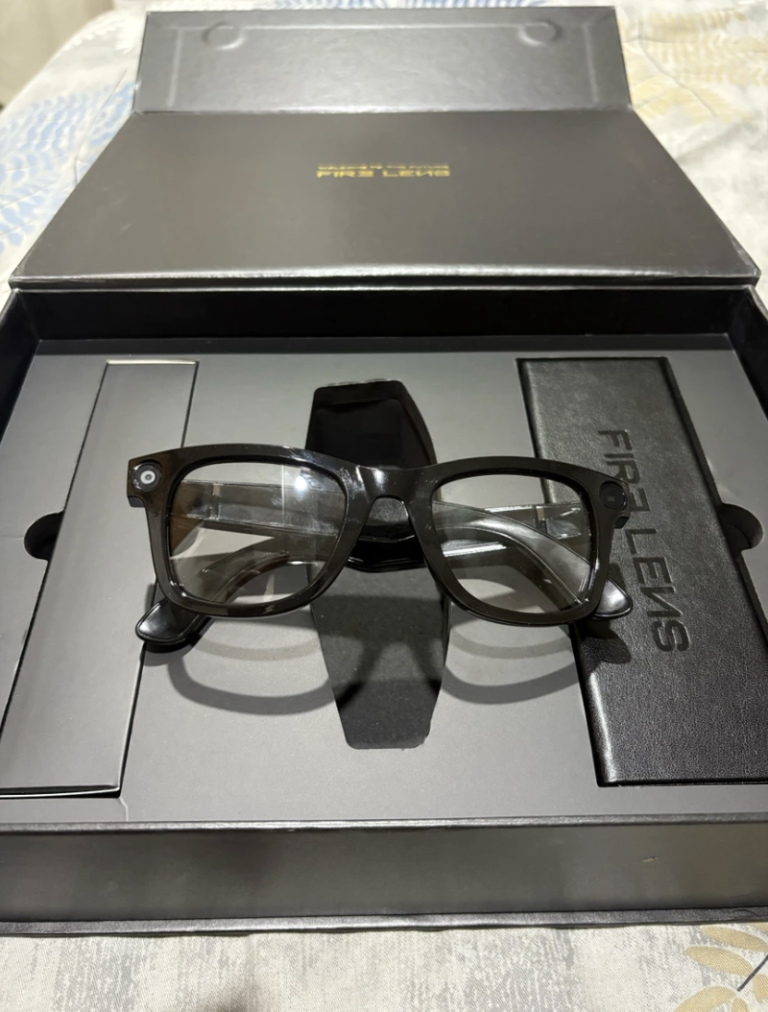
Out of the box, the Fire-Boltt Fire-Lens F1 AI Camera Smart Glasses look like a pair of proper shades, not a tech prop. The frames are lightweight and the finish feels solid for the price bracket. The hinge mechanism is snug, the temple arms hide the electronics cleanly, and the open-ear audio drivers don’t make the glasses look bulky. Fire-Boltt offers variants with photochromic and polarized lenses, which is handy if you want something that doubles as everyday eyewear. The model I used felt well-balanced on the face, no annoying nose pressure after hours of wear.
What’s under the hood, specs that matter
Here’s the thing: marketing material and retailer listings for these glasses show slightly different camera claims, which is confusing. In practice, the unit I tested records crisp Full HD video and takes decent stills; the commonly listed specs include an 8MP camera on some listings and higher megapixel claims on brand pages. Battery-wise, the official spec and retail pages point to a small battery (around 200–220 mAh) with practical day-to-day use lasting roughly 4–6 hours depending on how much camera and audio you use. Connection is straightforward via Bluetooth to your phone, and FireLens’ AI features, voice assistant, live translation, and hands-free controls, are baked into the experience. If specs are decisive for you, double-check the retailer page for the exact SKU before buying.
Daily-life usability, what I actually used them for
I used these glasses for quick point-and-shoot moments: capturing street scenes, short clips while walking, and hands-free voice notes. The open-ear audio made listening to podcasts and taking calls possible without isolating me from my surroundings, crucial when riding or crossing the road. The voice assistant handled simple commands well: make a call, take a picture, or trigger recording. Where they shined was convenience: you can genuinely grab a photo while keeping your hands on the handlebars or while carrying coffee. The camera’s angle is naturally forward-facing and unobtrusive, so you don’t need to pose or aim. Overall, they simplified capturing candid, real-time moments, that’s the core promise of AI Camera Smart Glasses, and Fire-Lens F1 mostly delivers.
Fire-Lens F1 real-world camera test, daylight, low light, stabilization
Real-world camera tests matter more than headline megapixels. Here’s how the Fire-Lens F1 performed in my month-long use.
Daylight: Colors and detail are respectable for social sharing. Shots taken at street level, parks, and cafes had pleasing contrast and usable detail when viewed on a phone. For quick Instagram-style snaps, the images are fine. Video in bright conditions is smooth at Full HD and the footage is stable enough for walking shots, thanks partly to the device’s natural framing and software smoothing.
Low light: This is where limitations show. In dim cafés and late-evening street scenes, noise increases and dynamic range drops. The camera exposes for the brighter parts, so shadow detail is often lost. It’s usable if you accept grainy footage, but not comparable to a flagship phone or a dedicated action camera.
Stabilization: There’s no mechanical gimbal, so expect some head-bob when jogging or riding on rough roads. For walking and casual capture, electronic stabilization helps, and the footage is watchable. For aggressive action or sports, you’ll want a dedicated action cam.
Audio in the videos is acceptable for voice but not studio quality, enough to record quick voice notes or candid interviews, but don’t expect broadcast-ready sound without an external mic. This matches the product’s affordable, utility-first positioning.
Battery life and charging
In a month of everyday use, short recordings, taking photos, listening to audio intermittently, and a few calls, I consistently got between 4 and 6 hours on a single charge. Heavy camera use (long video sessions) brought that down to the 3–4 hour range. Charging is reasonably fast, the glasses snap back to usable status quickly. If you’re a heavy content creator who films long sessions, carry a small power bank or keep them on their case between shoots. These glasses are built for convenience, not marathon filming.
Software, AI features and privacy
FireLens’ AI features are oriented toward hands-free convenience, voice assistant access, live translation, and some onboard AI prompts depending on the firmware. In day-to-day use, voice commands worked reliably in quiet environments. In noisy streets, accuracy dropped like any other voice assistant. Privacy is a recurring conversation with camera glasses: people will notice a camera near your eyes. The lens design here keeps the camera discreet but visible enough that it’s not stealthy. Fire-Boltt’s software allows quick toggles for recording and privacy modes; still, the ethical rule applies, be mindful when recording others.
Comfort and design for daily wear
These are among the more wearable AI Camera Smart Glasses I’ve tried. They look normal, feel light, and work with most face shapes. The open-ear audio is a big plus versus earbuds, you’re aware of traffic and conversations. The trade-off is audio fidelity; it’s not for audiophiles. Lens options (polarized/photochromic) make them practical as sunglasses in India’s bright sun, which is a big plus if you want one device for daily outdoor use.
Fire-Lens F1 vs Ray-Ban Meta smart glasses, where they differ
Compare the Fire-Lens F1 with Ray-Ban Meta smart glasses and you see two different philosophies. Ray-Ban Meta targets a premium segment: refined optics, deeper platform integration with Meta services, and extensive developer-backed features (and lately, AR displays in the higher-end Ray-Ban models). Fire-Lens F1 goes the value route, most of the core wearable features (camera, audio, voice assistant) at a fraction of the price. If you want the latest AR display, advanced sensors, and tight social-platform integration, Ray-Ban Meta and similar premium glasses are ahead. If you want a practical, affordable pair of AI Camera Smart Glasses that you won’t baby, the Fire-Lens F1 is a strong contender. Market coverage and newer AR devices from Meta are in active development and push the premium experience further.
Pain points and where Fire-Boltt should improve
Battery and low-light camera performance are the two obvious pain points. The mixed specs across listings (8MP vs higher numbers) also create buyer friction, clarity on the exact camera module and firmware features per SKU would help. Voice recognition needs work in noisy outdoor environments, and call audio quality can be better. Finally, sturdy water resistance would make them more versatile, the current models are fine for light rain but not full-on sweat-heavy workouts.
Who should buy the Fire-Boltt Fire-Lens F1 AI Camera Smart Glasses?
Buy them if you want a practical, affordable way to capture hands-free moments, take calls without earbuds, and use voice features without spending a premium. They’re great for commuters, casual content creators, and anyone who wants a daily-wear smart pair of shades without complex setup or excessive cost. Skip them if you need top-tier camera performance, long battery life for long shoots, or a full AR display experience.
Final verdict after one month
After daily use for a month, the Fire-Boltt Fire-Lens F1 AI Camera Smart Glasses feel honest about what they are: a practical, reasonably polished entry into wearable smart optics that lets you capture life as it happens without reaching for a phone. They won’t replace a dedicated camera or a premium AR smartglass, but they do something simpler really well, they make hands-free capture and quick interactions natural and unobtrusive. For the price band and the everyday use-case, they’re one of the most compelling AI Camera Smart Glasses available. If Fire-Boltt tightens up low-light performance and clarifies model specs, this could be a no-brainer for people who want useful wearable tech without the flagship price.