
For nearly a decade, Apple has watched Samsung, Motorola and others experiment with foldable phones while it stayed completely silent. The reason was never a lack of interest. Apple simply did not want to ship a foldable with an obvious crease down the middle of the screen. To Apple, that line in the display made the whole idea feel unfinished.
Now, thanks to a major breakthrough shown by Samsung at CES 2026, that problem may finally be close to disappearing.
And that changes everything about the iPhone Fold.
The crease problem may have just been solved
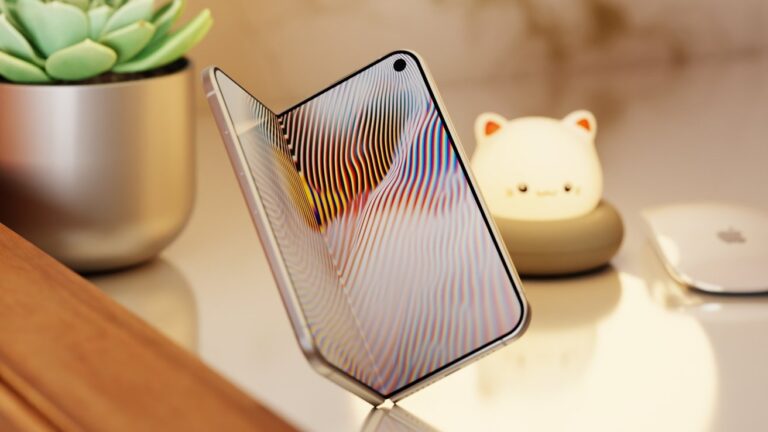
At CES, Samsung quietly showed a foldable display that looks nothing like what we are used to. There was no visible crease, not from the front and not even from the side. Even when the panel was folded, the surface remained smooth.
The key to this appears to be a new internal metal support plate. Instead of letting all the bending pressure concentrate along one thin line, the plate spreads the force across a wider area. That stops the screen from folding into a sharp ridge, which is what causes the crease on today’s foldables.
If this design holds up over time, it solves the single biggest technical flaw of foldable phones.
What makes this more interesting is that Samsung Display is also Apple’s display supplier. Industry watchers strongly suspect this new screen exists because Apple demanded it. Samsung benefits too, of course, but the timing and the specifications line up very neatly with Apple’s long-rumoured foldable iPhone.
Why Apple waited so long
Foldable screens wear out. They crease, they crack, and they become visually uneven after months of opening and closing. Apple did not want to launch a premium device with a built-in point of failure.
For years, Apple worked with different partners on hybrid OLED panels that mix glass and flexible plastic. Eventually, it settled on Samsung’s approach, which appears to have matured into the crease-free panel shown at CES.
This is why the iPhone Fold did not arrive in 2022 or 2024. Apple was waiting for this exact moment.
What the iPhone Fold is expected to look like
The foldable iPhone will not simply be a normal iPhone that bends. It is expected to open like a book, revealing a large internal display that feels more like a small iPad.
The main screen is widely rumoured to be around 7.7 inches, very close to the size of the iPad mini. Apple is said to be using a squarer shape than most phones, so when the device is unfolded it looks and feels more like a tablet than a stretched phone.
When folded, the iPhone Fold will still have a regular external screen, around 5.5 inches. This lets you use it like a normal iPhone for calls, messages and quick tasks without opening it every time.
Apple is also expected to make it extremely thin. Leaks suggest it could be around 5.6mm when open and just over 11mm when folded. That is thicker than a normal iPhone, but far slimmer than most current foldables.
A very serious hinge
A foldable phone lives or dies by its hinge. Apple has reportedly struggled here more than anywhere else.
The company is believed to be using Liquidmetal for the hinge, a material far stronger than titanium but still light. It resists bending and wear, which matters when you are opening and closing a device thousands of times.
The hinge will not just hold the phone together. It will also support the screen as it folds, helping keep that crease-free display smooth.
Cameras and hidden tech
Apple is expected to use a clever trick with the camera system. One half of the phone will contain a thicker camera area, similar to the raised camera section on current iPhones. That extra depth allows Apple to keep the rest of the body very thin.
The rear cameras are expected to include a main and an ultra-wide sensor, likely around 48MP. The external screen will have a normal punch-hole selfie camera.
The internal screen is where things get interesting. Apple is rumoured to be using an under-display camera so there is no notch or cut-out at all. When you open the phone, you get one uninterrupted sheet of glass, just like a tablet.
That fits perfectly with Apple’s obsession with clean design.
When is it coming?
After years of delays, the current consensus is that the iPhone Fold will launch in autumn 2026 as part of the iPhone lineup. Some reports still suggest it could slip to 2027 if there are hinge or durability issues, but the momentum now looks real.
Samsung is likely to use the same crease-free display in its own Galaxy Z Fold 8, which may arrive slightly earlier. That means Samsung could technically beat Apple to the no-crease experience.
But history suggests that will not slow Apple down.
The price will be eye-watering
This will not be a mass-market phone.
Most estimates place the iPhone Fold somewhere between $2,000 and $2,500, which in the UK will likely translate to well over £2,000. That makes it more expensive than many laptops and some Macs.
Apple is not aiming this at casual buyers. This is a halo product, designed to show what the company can do and to pull high-end users into a new category.
What this really means
The foldable iPhone is no longer just a rumour. The display technology now exists, the design makes sense, and Apple’s long silence finally has an explanation.
Samsung’s crease-free screen is the missing piece Apple was waiting for. Once that was solved, everything else could fall into place.
When the iPhone Fold arrives, it will not be about being first. It will be about being the first foldable that feels finished.